

Review · MILAN COOKING CLASSES
Milan: Italian Cooking Class with Food and Wine
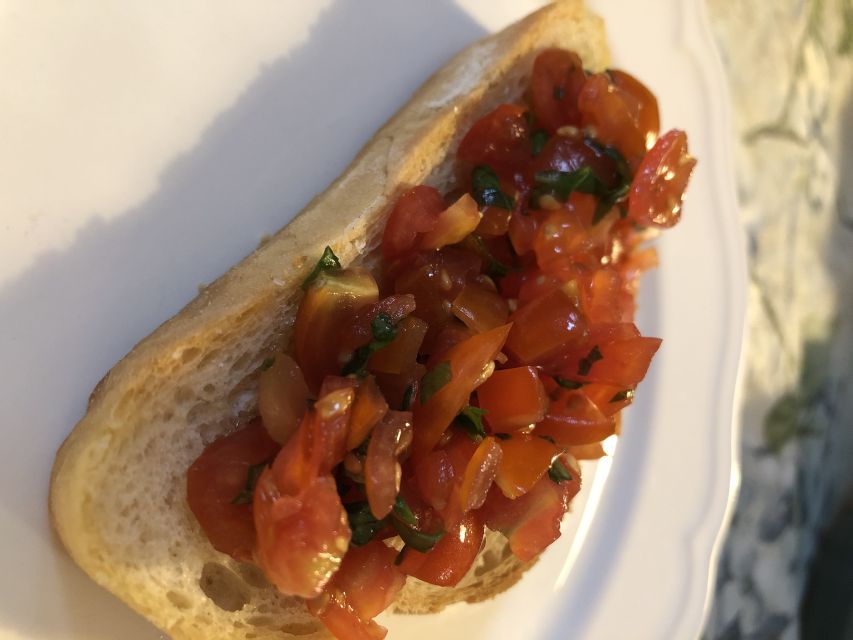
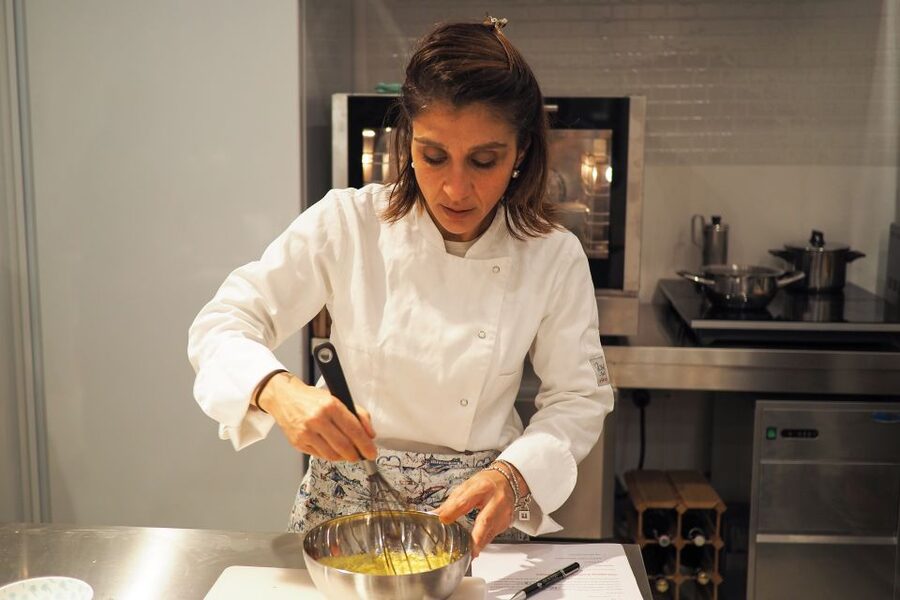
Making fresh pasta by hand is the heart of this three-hour class. At Chef and the City, you work at your own station with an Italian chef, prepare three dishes, then sit down with the group to eat them with wine. The menu can range from bruschetta and tagliatelle to gnocchi, ravioli, or tiramisù.
I like that you get practical pasta instruction, not just a demonstration, and that the chef explains the reasons behind techniques as well as the steps. I also like the mix of cooking and shared dining: the meal gives the class a relaxed finish, and the recipes make it easier to repeat at home.
One thing to keep in mind: the menu and the amount of cooking you do can vary. Some sauces take hours, so the chef may prepare them ahead rather than teach them from scratch in a three-hour session. If you want to cook every element yourself, ask what the class plans to make.
- Fresh pasta is hands-on: You may work with tagliatelle, ravioli, or another shape, using the tools and ingredients provided.
- The menu changes: Bruschetta, gnocchi, pasta, tiramisù, biscotti, and strudel are among the dishes made in different classes.
- The chef teaches technique and context: Expect practical tips, cooking explanations, and stories about Italian food.
- You eat together afterward: The prepared dishes become a group meal, with wine included.
- Recipes go home with you: The chef provides copies so you can try the dishes again.
- Plan for a kitchen, not a restaurant: Tie back long hair, do not eat or drink while cooking, and leave large bags and pets elsewhere.
Start at Chef and the City’s cooking lab
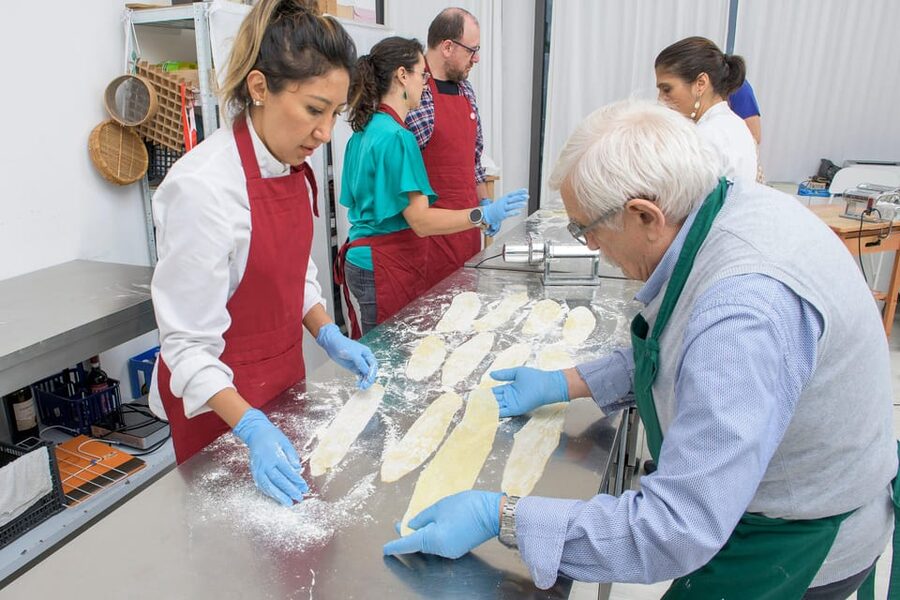
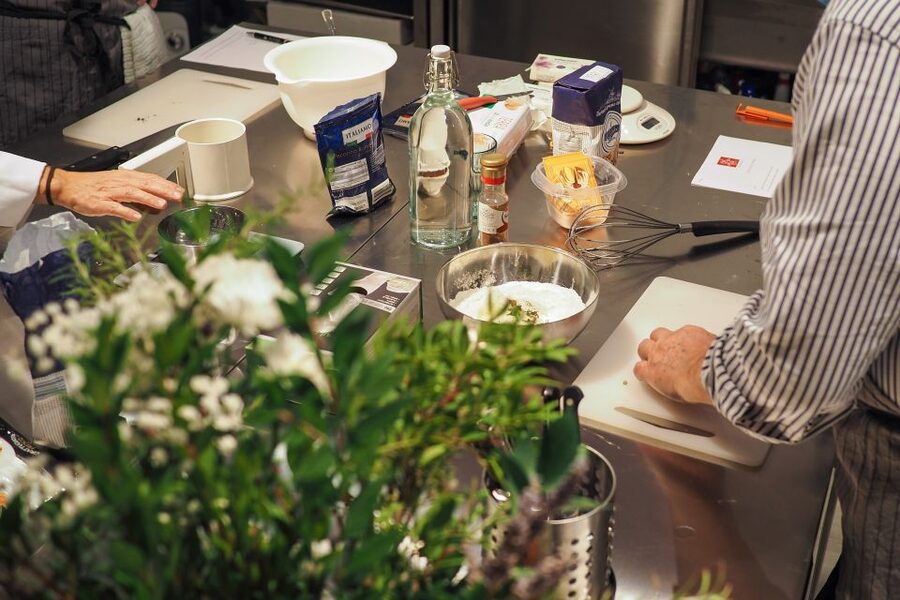
The class meets at Chef and the City, a street-level shop marked by three large windows and red signs. When you arrive, ring the bell at the main window door. The location is set up as a professional cooking lab, which means the session has a more organized feel than cooking in someone’s home kitchen.
You will have your own personal desk and cooking tools, plus an apron and gloves. The setup helps you focus on the task in front of you rather than crowding around one counter. It also gives the chef room to demonstrate a step, then let you try it yourself.
The class is offered in Italian and English. English-speaking participants describe being able to follow explanations and ask questions, so you do not need to speak Italian to take part. The exact instructor can vary. Ilaria is a recurring name, and some sessions have also been led by or assisted by Fernando, Klara, and other team members.
Settle in with snacks before the cooking begins
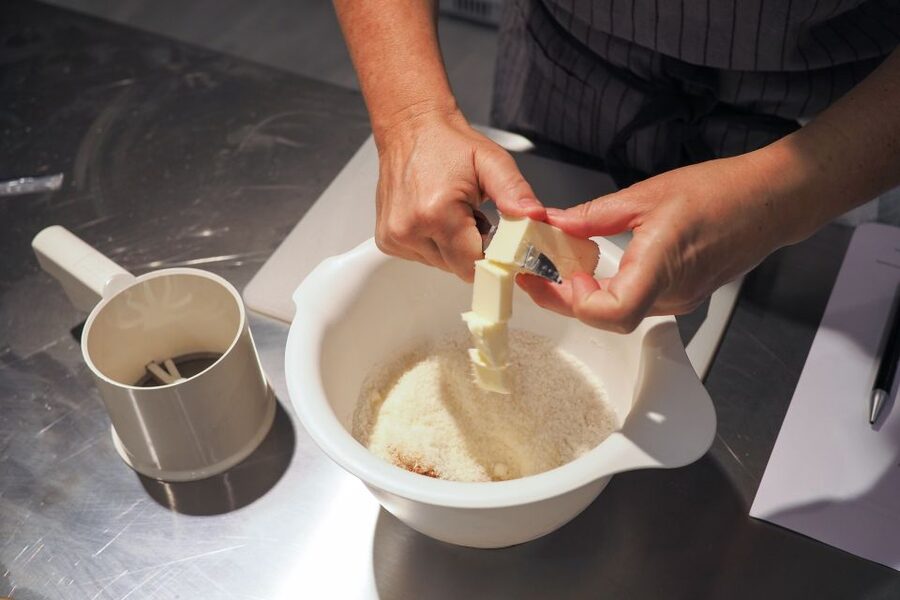
The session starts with light snacks, which may include cheese, dried tomatoes, mortadella, and olives. Coffee, tea, infusions, and water are also available, along with small sweets such as cookies, biscuits, and candies. This gives you a chance to meet the group and get comfortable before handling ingredients.
Do not mistake the snacks for permission to nibble while working. The kitchen rules are clear: no food or drinks during cooking, and no tasting as you go. Tie up long hair, too. These are sensible rules in a professional kitchen, though they may feel strict if you are used to casually sampling sauce at the stove.
The class is designed to be social as well as practical. You might come with a partner, family member, or friend, but solo participants can join in too. Group size is not fixed in the information provided, and some sessions may be especially small. That can mean more direct attention, though it may also make the group meal less lively than a larger class.
More food tours in Milan:
- Milan: Navigli District Canal Boat Tour with Aperitivo
★ 3.6 · 3,253 reviews - Milan’s Authentic Street Food tour: A Gourmet Experience
★ 4.5 · 717 reviews - Milan: Guided Street Food Walking Tour with Food Tasting
★ 4.8 · 654 reviews
Learn pasta by making it, not just watching
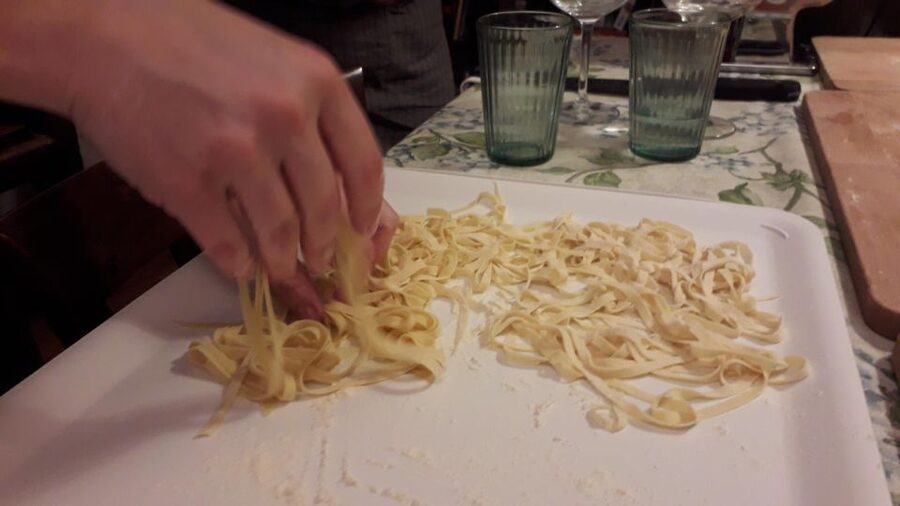
Fresh pasta is the main reason I would book this experience. Depending on the class, you might make tagliatelle, gnocchi, or ravioli. The chef demonstrates the process, explains how the dough should feel, and guides you through shaping or rolling it. Pasta-making is one of those skills that looks simple in a short video and becomes much clearer when someone can correct your technique in the moment.
Some classes use a pasta machine, while others focus on shaping a particular type by hand. If you have never made pasta, the chef’s step-by-step approach should make the process manageable. If you already cook, you can still pick up useful details about texture, technique, and what makes a dish feel properly Italian.
The class can also include an appetizer and dessert, making the session feel like a three-course cooking experience rather than a single pasta lesson. Bruschetta, tiramisù, biscotti or cantucci, and apple strudel have all featured in different menus. The precise combination depends on the day, so treat the dishes listed as possibilities, not a promise of a fixed menu.
One especially useful lesson is learning why familiar dishes are made a certain way. In one class, a chef explained the traditional approach to carbonara and why cream and bacon do not belong in the classic version. You are free to adapt recipes at home, but knowing the original method first gives you a better starting point.
Understand what fits into a three-hour class
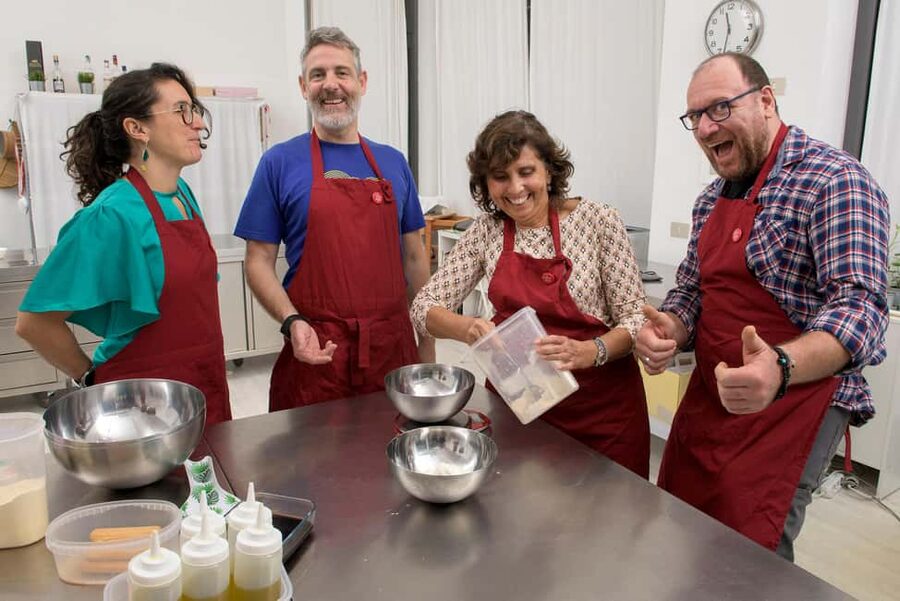
The cooking lab covers three dishes in about three hours, but not every component can be made from scratch in that time. Slow-cooked sauces such as ragù may take hours, so the chef may prepare them before class and give you the recipe to make later. You could then spend your hands-on time on pasta, an appetizer, or another dish that suits the schedule.
This is a practical trade-off, not necessarily a flaw. A class that tried to teach every sauce from its first step might run far longer or leave you with very little time to cook. Still, if you are keen to learn a particular sauce, ask whether you will make it during the session or simply receive the recipe.
The same applies to the menu. One group might make bruschetta, fresh pasta, and tiramisù; another might prepare gnocchi and strudel. The advertised selection is broad, and the class aims to teach traditional cooking in a modern, healthy, and low-waste style. The specific lesson is not guaranteed to cover every dish named in the description.
Sit down for the meal you made
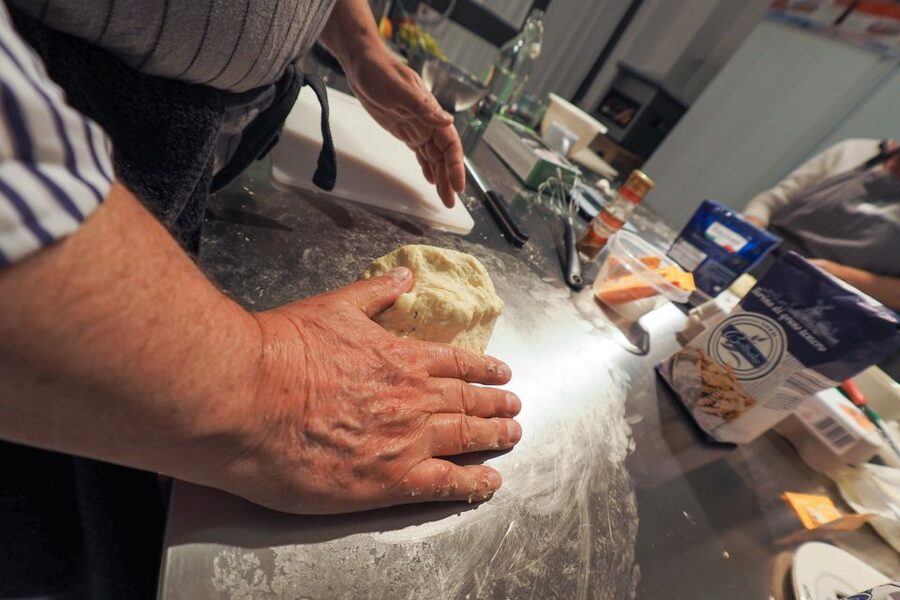
After the kitchen work, you sit down together and eat the dishes you have prepared. Wine is included, and both red and white have been served in some sessions. This shared meal is more than a convenient way to finish: it gives you time to compare results, talk with the chef, and enjoy the food without standing over a work surface.
There is also a simple pleasure in eating something you have just made. Even a familiar pasta dish feels different when you understand how the dough was mixed, shaped, and cooked. The group setting makes the experience a good fit for couples, friends, families with older children, and solo visitors who enjoy meeting people over a meal.
Wine is part of the experience, but you should keep the kitchen rules in mind: drinks wait until the cooking is done. If you are looking for a class with wine poured throughout the lesson, this format may not be what you expect. Here, the emphasis is on cooking first and relaxing over the meal afterward.
More cooking classes in Milan:
- The Secrets to Learn Fresh Pasta and Tiramisù in a Glam Home
★ 5.0 · 1,182 reviews - Milan: Pasta and Tiramisu Cooking Class with Wine
★ 4.8 · 1,106 reviews - Gnocchi, Pasta, Tiramisù and Wine Class
★ 5.0 · 691 reviews - Milan: Pasta and Tiramisu Small Group Cooking Class with Wine
★ 5.0 · 660 reviews
Take home recipes you can use
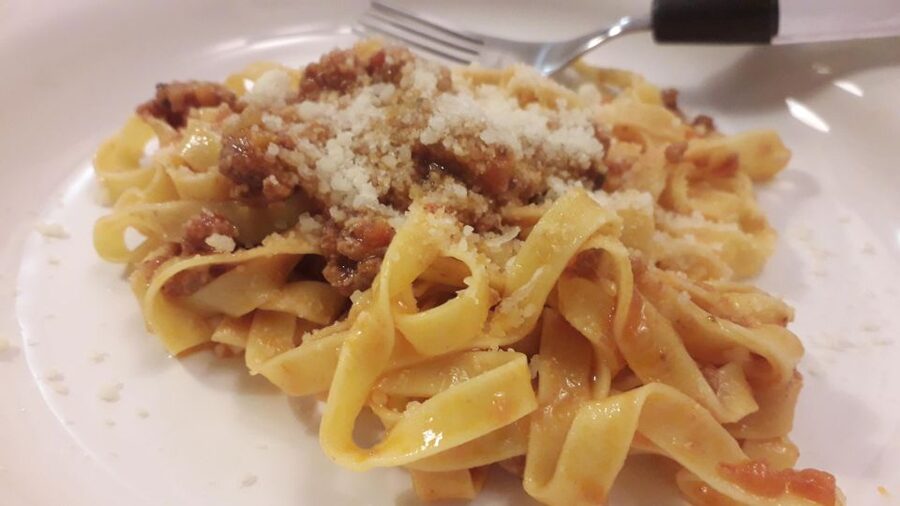
The chef provides copies of the recipes, so you do not have to rely on memory once you leave Milan. That matters because the class is not only about making a pleasant meal in the moment. The more useful measure is whether you can repeat the dishes at home, and a written recipe gives you a practical reference.
Some methods may call for equipment you do not own, such as a pasta machine. You can still learn the basic process and decide later whether to buy one. A few dishes may also involve ingredients or techniques that take practice, so treat the recipes as a starting point rather than a guarantee that your first attempt will match the class meal.
The teaching style is a strong part of the value. Instructors are described as clear and patient, with explanations that cover both technique and the reasoning behind it. That helps beginners follow along, while experienced home cooks can ask more specific questions. The atmosphere is often lively and humorous, but the session remains structured enough to get the food made.
Is $80 good value for a Milan cooking class?
At $80 per person for three hours, this is not the cheapest way to have dinner in Milan. But you are paying for more than a meal: ingredients, cooking tools, an apron and gloves, instruction, wine, snacks, and the recipes are included. You also get time at your own station and the chance to prepare several dishes rather than watch a chef do all the work.
The value is strongest if you want a participatory activity and expect to use what you learn again. A restaurant meal may cost less, but it will not teach you to handle fresh pasta or send you home with recipes. If your main goal is simply to eat, a trattoria is a more direct option. If you want dinner plus a cooking lesson and a social evening, the price makes better sense.
The class also works well as a change of pace from sightseeing. Three hours is a meaningful block of time, so it is best suited to a day when you can arrive without rushing. Check the available start times when booking and allow enough time to find the shop and ring the bell at the correct entrance.
Who should book this class?
Book it if you want to learn by doing, are curious about fresh pasta, or like the idea of sharing a meal with people you have just met. Beginners are welcome, and experienced cooks can benefit from the chef’s explanations and practical tips. It is also a strong choice for a couple’s activity or a memorable evening with a friend.
It is not suitable for children under 10 or people with mobility impairments, and the venue is not wheelchair accessible. Pets, smoking, luggage, and large bags are not allowed. There is no luggage storage listed, so make other arrangements before you arrive. If you have dietary needs, raise them with the provider before booking; some participants have received consideration for dietary restrictions, but specific accommodations are not guaranteed here.
You can cancel up to 24 hours in advance for a full refund, and the reserve-now, pay-later option can help keep plans flexible. Those terms are useful, but the key decision is still the menu: if you have a particular dish in mind, confirm what is planned for your session.
Should you book Chef and the City?
I would book this class if you want a practical introduction to Italian cooking, especially fresh pasta, and would enjoy eating the results in good company. The combination of a personal workstation, an engaging instructor, three dishes, recipes, and wine gives the three-hour session solid value.
Go in expecting a menu that can change and a few components that may be prepared ahead. If that sounds fair, this is a useful, sociable way to spend an evening in Milan, and you will leave with more than a full stomach: you will have techniques to try in your own kitchen.
FAQ
How long is the cooking class?
The class lasts three hours. Check availability for the starting times offered on your chosen date.
What does the $80 price include?
Food, beverages, wine, cooking tools, gloves, and aprons are included. Recipes are provided by the chef.
Which dishes will I cook?
The menu varies. Possible dishes include fresh pasta such as tagliatelle, gnocchi, or ravioli, as well as bruschetta, focaccia, tiramisù, biscotti, and other Italian dishes.
What languages are spoken?
The class is offered in Italian and English.
Where is the meeting point?
Meet at Chef and the City, a street-level shop with three large windows and three red signs. Ring the bell at the main window door when you arrive.
Can I bring children, pets, or luggage?
Children under 10 are not suitable for this activity. Pets, luggage, and large bags are not allowed. The venue is not wheelchair accessible.
More hands-on workshops in Milan
- Milan Cooking Class: Authentic Pizza & Gelato Making
★ 5.0 · 582 reviews - Milan Culinary Experience: Pasta & Gelato or Tiramisù Class
★ 5.0 · 337 reviews - Small Group Cozy Cooking Class in a Typical Milanese Home.
★ 5.0 · 302 reviews - Milan: Pasta, Ravioli, and Gelato Class in a Glamorous Home
★ 4.9 · 268 reviews
More wine tastings around Milan
- Small-Group Barolo Wine Tasting, Alba & UNESCO Piedmont Hills
★ 5.0 · 689 reviews - Milan: Wine Lovers Experience at Cantina Urbana Winery
★ 4.6 · 454 reviews - Pizza Cooking Class with Tiramisù and Wine Tasting in Milan
★ 5.0 · 172 reviews - Milan: Wine Tasting Experience in the City Centre
★ 4.5 · 113 reviews
Newest reviews in Milan
- Milan Pass Including Duomo Terraces and La Scala★ 3.0 · 39 reviews
- The Magic of Navigli: Self-Guided Puzzle Quest in Milan★ 5.0 · 7 reviews
- Milan: Sweet Delights Patisserie Tour by Do Eat Better★ 5.0 · 56 reviews
- Milan Luggage Storage Duomo★ 4.0 · 6 reviews
- Milan Must-See Sites Guided Tour with Skip-the Line Tickets to Duomo & Cathedral★ 4.0 · 6 reviews
- Milan: Luggage Storage Central Station★ 4.0 · 9 reviews
- Milan: Museum of the 900 Fast-Track Entry Ticket & Audio Guide★ 4.0 · 12 reviews
- Milan Private Walking Tour with a Local★ 4.5 · 15 reviews
Milan Cooking Classes, compared.

The Secrets to Learn Fresh Pasta and Tiramisù in a Glam Home
Read our review →


Pasta and Tiramisu Small Group Cooking Class with Wine
Read our review →
Milan Cooking Class: Authentic Pizza & Gelato Making
Read our review →
Milan Culinary Experience: Pasta & Gelato or Tiramisù Class
Read our review →
Small Group Cozy Cooking Class in a Typical Milanese Home.
Read our review →Browse the lists this tour appears in