

Review · MILAN MUSEUMS
Milan: Leonardo3 The World of Leonardo Museum Entry Ticket
Leonardo3 turns Leonardo da Vinci’s sketched ideas into working, three-dimensional machines. You can inspect inventions based on his manuscripts, test interactive displays, and see a digital restoration of The Last Supper, all inside the Galleria Vittorio Emanuele II.
I like two things in particular: the models make complicated drawings easier to understand, and the workshop gives children a chance to build rather than just read. One consideration: the exhibition space can feel tight, especially when several people want to use the same interactive display.
Key points
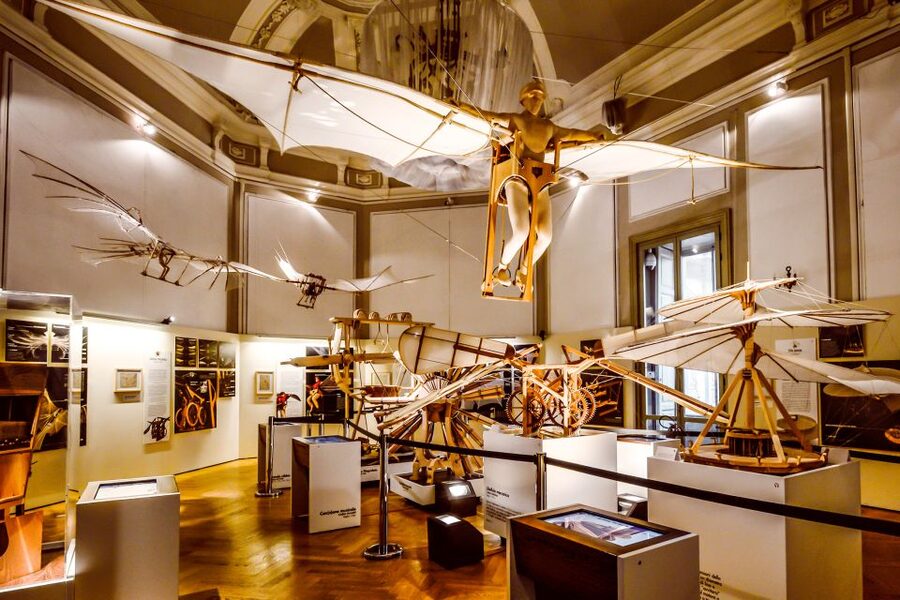
- More than 200 reconstructions show how Leonardo’s ideas might work in three dimensions.
- A mechanical dragonfly and other interactive machines bring his engineering sketches off the page.
- The Last Supper gets a digital treatment, with restored details and an optional three-dimensional setting.
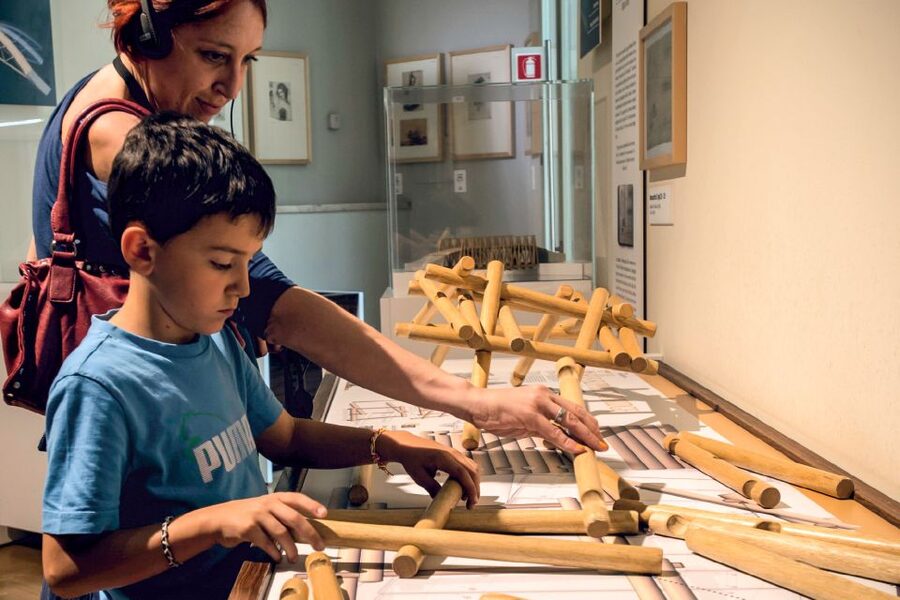
- A hands-on workshop includes a wooden self-supporting bridge and an inventor’s certificate activity for children.
- An audio guide adds context and is available in eight languages; interactive displays use English and Italian.
- Plan for roughly one to two and a half hours, depending on how much you read, listen, and try.
Inside the Galleria, a museum built around ideas
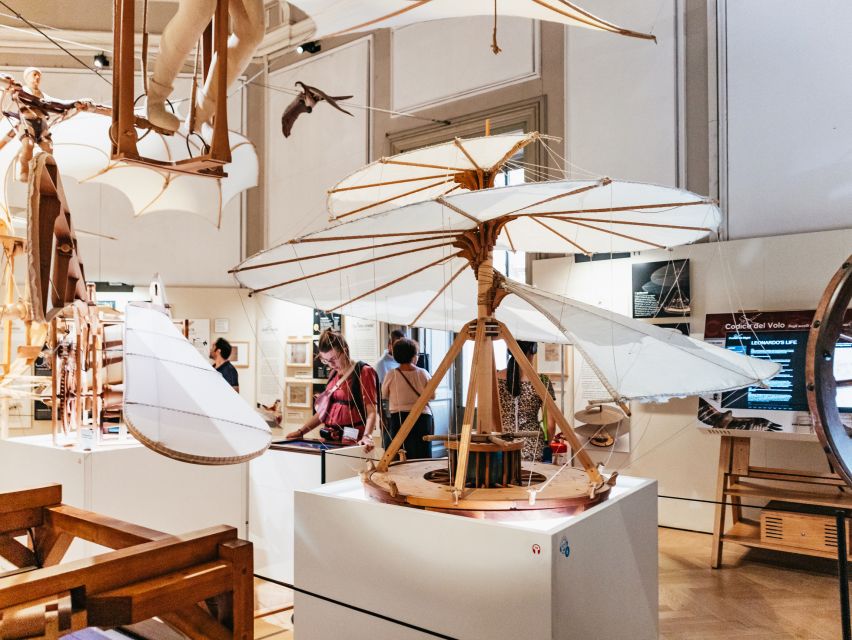
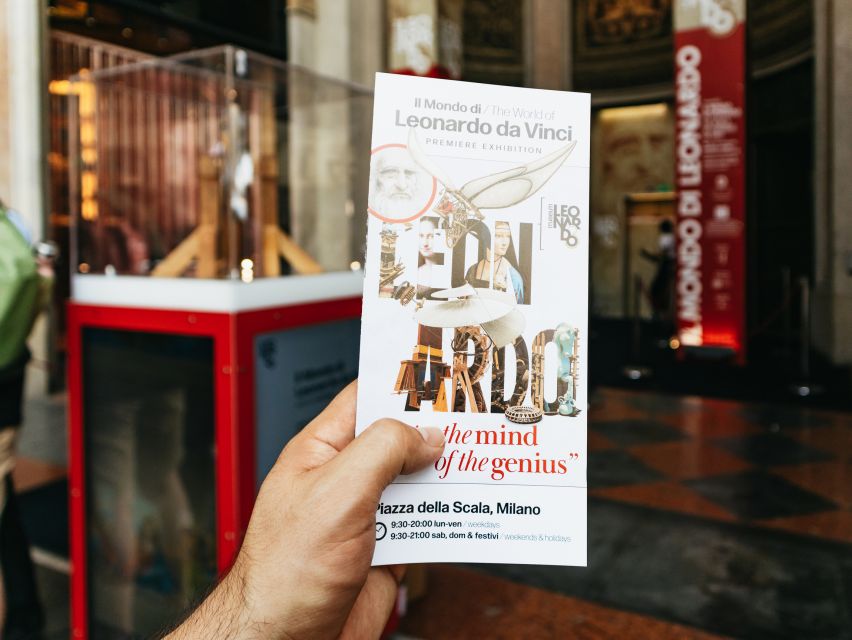
Leonardo3 is reached through the Galleria Vittorio Emanuele II in Piazza della Scala, a striking place to start a museum visit. Show your ticket at the ticket office, then follow the exhibition through its presentation of Leonardo as an engineer, inventor, artist, and observer of the natural world.
This is not a gallery of original Renaissance paintings. Its main appeal is the work of turning Leonardo’s notebooks into accessible digital displays and physical models. His drawings can be hard to read on a page, especially when they show several moving parts or a design from an unfamiliar angle. Here, three-dimensional reconstructions help you see the intended motion and structure.
That difference matters. You are not simply looking at old sketches behind glass. You can compare a manuscript image with a model and consider how researchers interpreted the notes to make it function. The exhibition’s explanations also describe how the models were constructed, which gives you a useful sense of the boundary between Leonardo’s own work and modern reconstruction.
More museum visits in Milan:
- Milan: Science and Technology Leonardo da Vinci Museum Entry
★ 4.5 · 7,169 reviews - Official San Siro Stadium and Museum Guided Tour
★ 4.4 · 3,573 reviews - Milan: La Scala Theater & Museum Guided Experience
★ 4.1 · 2,931 reviews
From codex pages to working machines
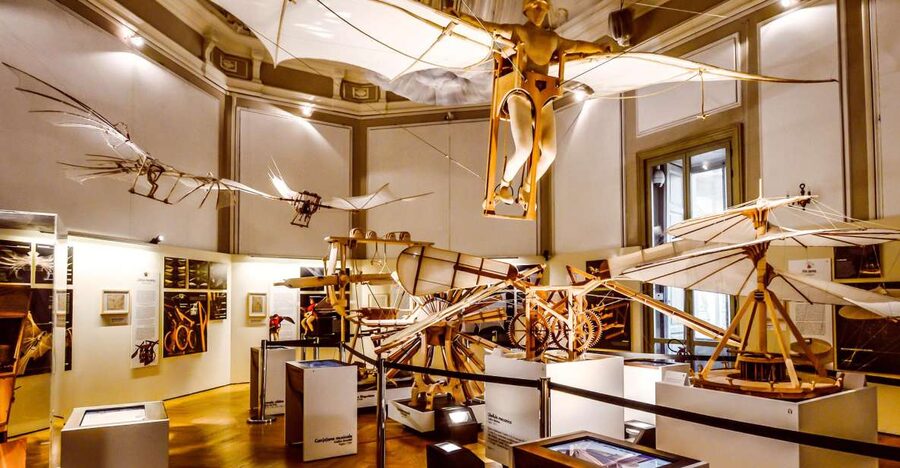
The central attraction is the collection of more than 200 interactive, three-dimensional machines. They cover a wide range of Leonardo’s interests, from flight and mechanical movement to military equipment and theatrical devices. The range helps make the point that his curiosity was not limited to painting.
Some machines are built as working models from the studies in his manuscripts. The mechanical dragonfly is one example, and it gives you a tangible way to think about how Leonardo explored movement and flight. Instead of trying to decode a sketch on your own, you can watch a reconstruction explain the idea through form and action.
The exhibition also presents designs for equipment such as crossbows, submarines, and machine guns. These can prompt useful questions about how Leonardo’s ideas related to the military concerns of his time. His engineering was not only about clever gadgets. The designs reflect a period when Italian territories were divided and defence was a real issue.
A model is still an interpretation, not proof that Leonardo built or tested every invention. Keep that distinction in mind as you explore. The exhibition’s best approach is to treat the machines as informed reconstructions of ideas recorded in his notebooks, rather than as surviving devices from Leonardo’s workshop.
More than machinery: canals, buildings, and a horse
Leonardo’s engineering reaches beyond weapons and flight. Dedicated areas look at canal building and the planning of urban life, giving you a glimpse of his interest in practical systems and public works. These displays broaden the picture of an inventor who thought about how cities and infrastructure could function.
Another section follows the process behind the proposed horse memorial. It offers a different kind of engineering problem: not only how to make a large work of art, but how to plan and produce it. If you are mainly drawn to the famous flying machines, these quieter subjects may feel less immediately exciting. They are worth a pause, though, because they show the range of Leonardo’s ambitions.
The exhibition includes a room devoted to art, with references to works such as the Mona Lisa and Lady with an Ermine. This is not the place to expect a major collection of original paintings. The focus remains on digital interpretation, reconstruction, and the ideas behind Leonardo’s work.
The Last Supper, seen through a digital restoration
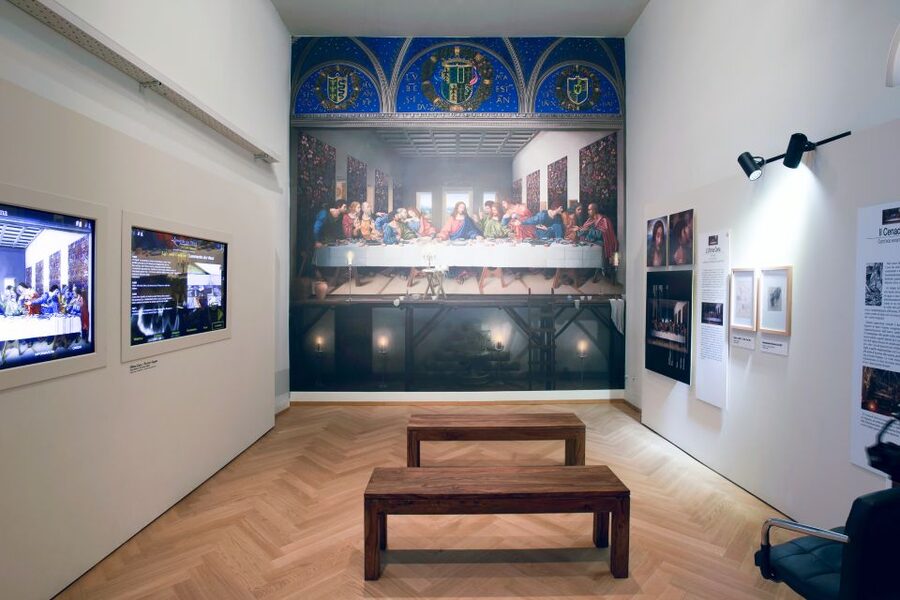
The digital presentation of The Last Supper is a highlight for many visitors. It lets you examine details in a digital version of the wall painting at Santa Maria delle Grazie, with an optional three-dimensional reconstruction of its setting. That close-up, screen-based approach can help you notice features that are difficult to take in when you are standing before the original.
It is important to know what this is, and what it is not. You are viewing a digital restoration and interpretation, not Leonardo’s original mural. If you have a timed visit to Santa Maria delle Grazie planned, this exhibition does not replace it. The original is a work of art in its own setting; Leonardo3 offers another way to study the image and its details.
For a visitor who cannot arrange a visit to the original, the digital display still gives you a meaningful look at the painting. For a Leonardo enthusiast, the contrast between a restored digital image and the physical original can be interesting in its own right. You can decide how much time to give it, rather than treating it as a substitute.
More tickets and passes in Milan:
- Milan: Cathedral and Duomo’s Terraces Entrance Ticket
★ 4.6 · 61,054 reviews - Milan Cathedral: Duomo Terraces Ticket (No Church Access)
★ 4.6 · 6,111 reviews - Milan: Guided Walking Tour & Last Supper Visit with Ticket
★ 4.7 · 5,409 reviews - Milan: Duomo Rooftop and Cathedral Guided Tour with Tickets
★ 4.8 · 2,678 reviews
A workshop that gives young visitors something to do
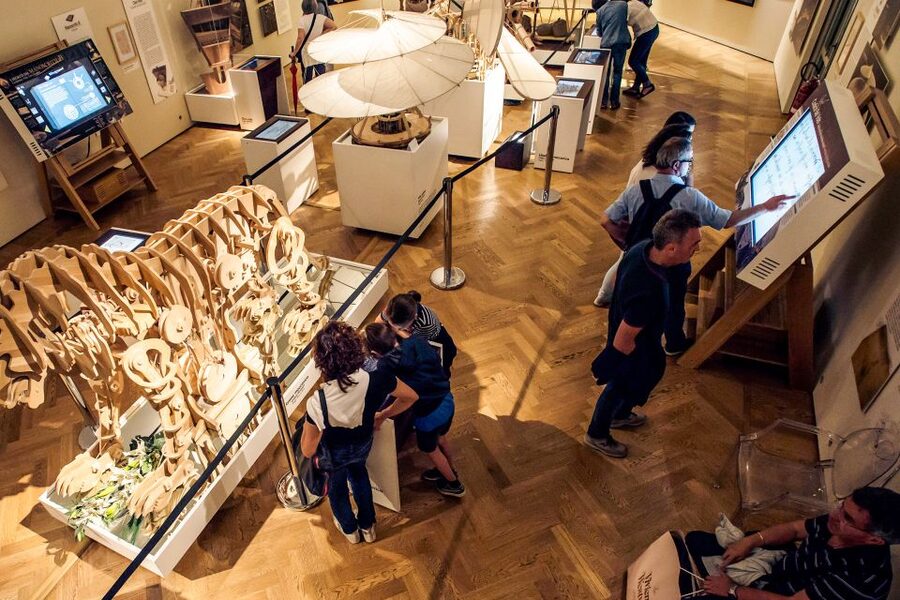
The children’s workshop adds a welcome change of pace. Kids can assemble a self-supporting bridge from wooden parts or print an inventor’s certificate. These activities turn the exhibition’s themes into something hands-on, and they can help younger visitors stay engaged after a run of displays and explanations.
The bridge activity is a particularly clear fit for the museum. It lets you test how shapes and weight can work together, rather than only reading about an idea. Still, this is a small workshop area, not a full programme of supervised activities. The displays and activities are in English and Italian, so keep that in mind if your child relies on another language.
Families do not need to treat the visit as a long, formal lesson. Some children may want to try each interactive element; others may be happy with the machines and a short stop at the workshop. The exhibition’s content is likely to suit school-age children best, while the hands-on parts make it more approachable for younger visitors. One visitor recommended it for ages eight and up, but every child’s interests differ.
Take the audio guide if you want the details
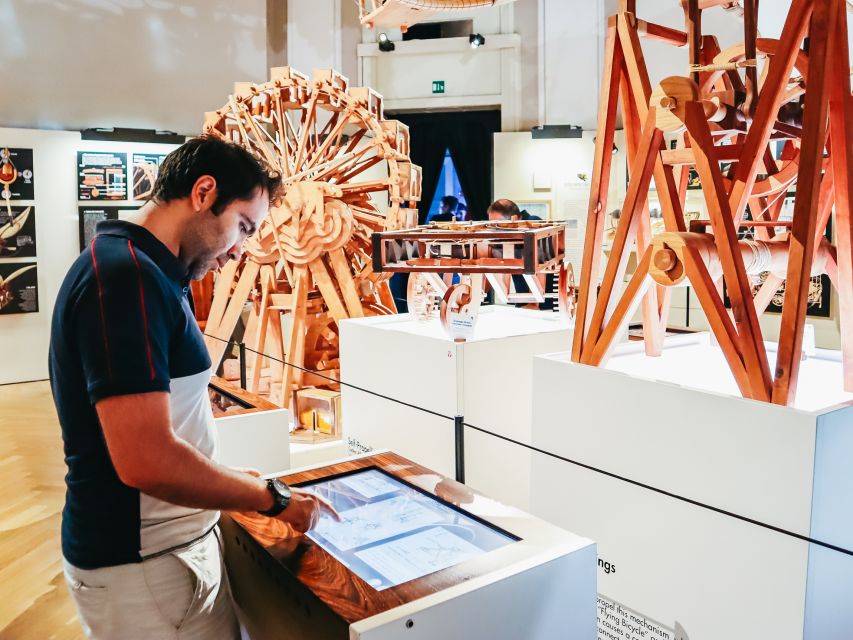
The optional audio guide is a useful addition if you want more than a quick look at the models. It explains the machines and Leonardo’s ideas, and it is offered in Italian, English, Russian, German, French, Spanish, Portuguese, and Chinese. The interactive experiences themselves are in English and Italian.
There is a lot to take in. The exhibition is described as detailed, and the audio guide can help you follow the logic behind the reconstructions without having to rely only on text panels. If you are especially interested in Leonardo’s notebooks, the guide can also help you connect an invention with the manuscript study that inspired it.
Check the ticket option before booking, since the audio guide is included only if you select that option. The ticket price listed for entry is $18 per person, but the audio guide may affect your final cost. A 10 percent bookshop discount on books is included when you show your GetYourGuide voucher at the counter.
How much time to allow, and what the space feels like
The ticket is valid for one day, and you choose an available starting time when you check availability. There is no fixed visit duration in the activity details. In practice, the time you need depends on how many displays you try and whether you listen to the full audio guide. A quick visit might take around an hour, while a closer look can stretch to about two hours or more.
The exhibition’s density is both a strength and a drawback. There is plenty to examine in a relatively small space, but the rooms can feel crowded, and some interactive displays may be harder to reach when other people are using them. If you have the choice, allow enough time to wait your turn rather than rushing from one machine to the next.
The interior can also feel warm, which may make it less comfortable to linger for a long time. Food and drinks are not allowed, so plan to eat before or after your visit. Cameras are also prohibited, so you will need to enjoy the models without taking photographs.
Is $18 good value for Leonardo3?
At $18 per person, the ticket buys more than a traditional display of objects and captions. You get access to a large group of digital and physical reconstructions, interactive machines, the Last Supper presentation, and the children’s workshop. If Leonardo’s engineering interests you, or if you like exhibitions that explain how ideas work, that is a solid amount to explore for the price.
The value depends on how you like to visit museums. If you skim every display and do not use the interactive features, you may feel that the exhibition is compact. If you read the explanations, use the audio guide, and spend time with the models, you can easily stay much longer. The audio option is worth considering for anyone who wants more context, but remember it is not automatically included with every ticket choice.
The bookshop discount adds a small practical benefit if you plan to buy a book. Souvenirs are available for purchase, but they are not included. Transportation to and from the museum is also not part of the ticket.
Who should book this visit?
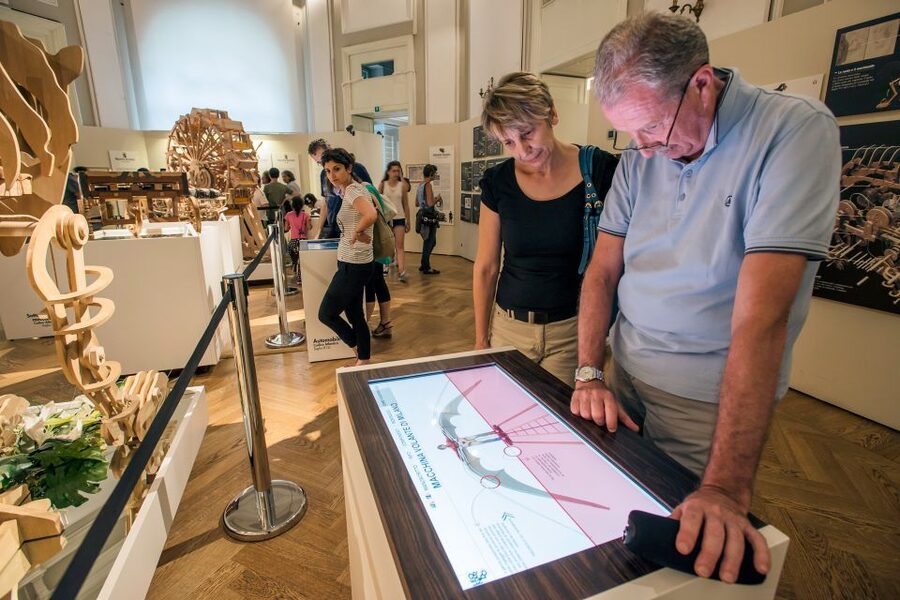
I would put Leonardo3 high on the list for anyone curious about how Leonardo thought, not only what he painted. It suits adults who like engineering, science, design, and the process of turning a drawing into a working object. It is also a good choice for families with children who learn best by touching, building, and testing ideas.
You do not need to be a Leonardo expert to follow the exhibition. The models and explanations give you a clear entry point, while the audio guide can supply more detail if you want it. On the other hand, if you are looking for a large art museum or a quiet, spacious gallery, this compact, interactive setting may not be the right fit.
The venue is wheelchair accessible. Entry is through the Galleria Vittorio Emanuele II in Piazza della Scala, and the activity ends back at the meeting point. You can cancel up to 24 hours in advance for a full refund, and the reserve-now, pay-later option is available.
Should you book Leonardo3?
Book it if you want to see Leonardo’s inventions explained through models you can inspect and interact with, or if you need a family-friendly museum stop in central Milan. The digital Last Supper and the hands-on bridge activity make the visit more varied than a room full of drawings.
Skip it if you mainly want original artworks, a spacious museum, or a replacement for seeing The Last Supper in person. For most curious visitors, though, the chance to see Leonardo’s ideas made legible in three dimensions makes this a worthwhile, focused stop. Choose the audio-guide option if you want the full story, and leave time to explore at a steady pace.
FAQ
How much does the entry ticket cost?
The listed price is $18 per person. The audio guide is included only if you select that option.
How long is the ticket valid?
The ticket is valid for one day. Check availability for the starting times offered.
How long should I allow for the visit?
There is no set visit duration. Allow around an hour for a shorter visit, or longer if you want to use the audio guide and spend time with the interactive displays.
Where is the meeting point?
Enter through the Galleria Vittorio Emanuele II in Piazza della Scala and show your ticket at the ticket office.
What can I see inside?
The exhibition has more than 200 interactive, three-dimensional machines based on Leonardo’s manuscripts, along with a digital restoration of The Last Supper and other displays about his work.
What languages are available?
Interactive experiences are in English and Italian. The optional audio guide is available in Italian, English, Russian, German, French, Spanish, Portuguese, and Chinese.
Are there activities for children?
Yes. Children can print an inventor’s certificate or assemble a self-supporting bridge from wooden parts.
Can I take photographs or bring food and drinks?
No. Cameras, food, and drinks are not allowed.
Is the museum wheelchair accessible?
Yes, the activity is listed as wheelchair accessible.
Can I cancel my ticket?
Yes. You can cancel up to 24 hours in advance for a full refund.
Newest reviews in Milan
- Milan Pass Including Duomo Terraces and La Scala★ 3.0 · 39 reviews
- The Magic of Navigli: Self-Guided Puzzle Quest in Milan★ 5.0 · 7 reviews
- Milan: Sweet Delights Patisserie Tour by Do Eat Better★ 5.0 · 56 reviews
- Milan: Luggage Storage Central Station★ 4.0 · 9 reviews
- Milan Luggage Storage Duomo★ 4.0 · 6 reviews
- Milan Must-See Sites Guided Tour with Skip-the Line Tickets to Duomo & Cathedral★ 4.0 · 6 reviews
- Milan: Museum of the 900 Fast-Track Entry Ticket & Audio Guide★ 4.0 · 12 reviews
- Milan Private Walking Tour with a Local★ 4.5 · 15 reviews
Milan Museums, compared.
Science and Technology Leonardo da Vinci Museum Entry
Read our review →
Official San Siro Stadium and Museum Guided Tour
Read our review →

Pinacoteca Ambrosiana & da Vinci Codex Exhibition
Read our review →
La Scala Theater and Museum Tour with Entry Tickets
Read our review →
Pinacoteca Ambrosiana and San Sepolcro Crypt Ticket
Read our review →
Cathedral, Archeological Area and Museum Ticket
Read our review →
Browse the lists this tour appears in